Welcome to the March 2026 edition of Rahatt's AI Writing Report! This month, we're diving deep into the evolving landscape of AI in self-publishing. From adoption rates and popular tools to cost savings and author sentiment, we'll break down the key trends and what they mean for you. We also take a look at Amazon's AI publishing policy. Let's get started!
AI Adoption Among Authors
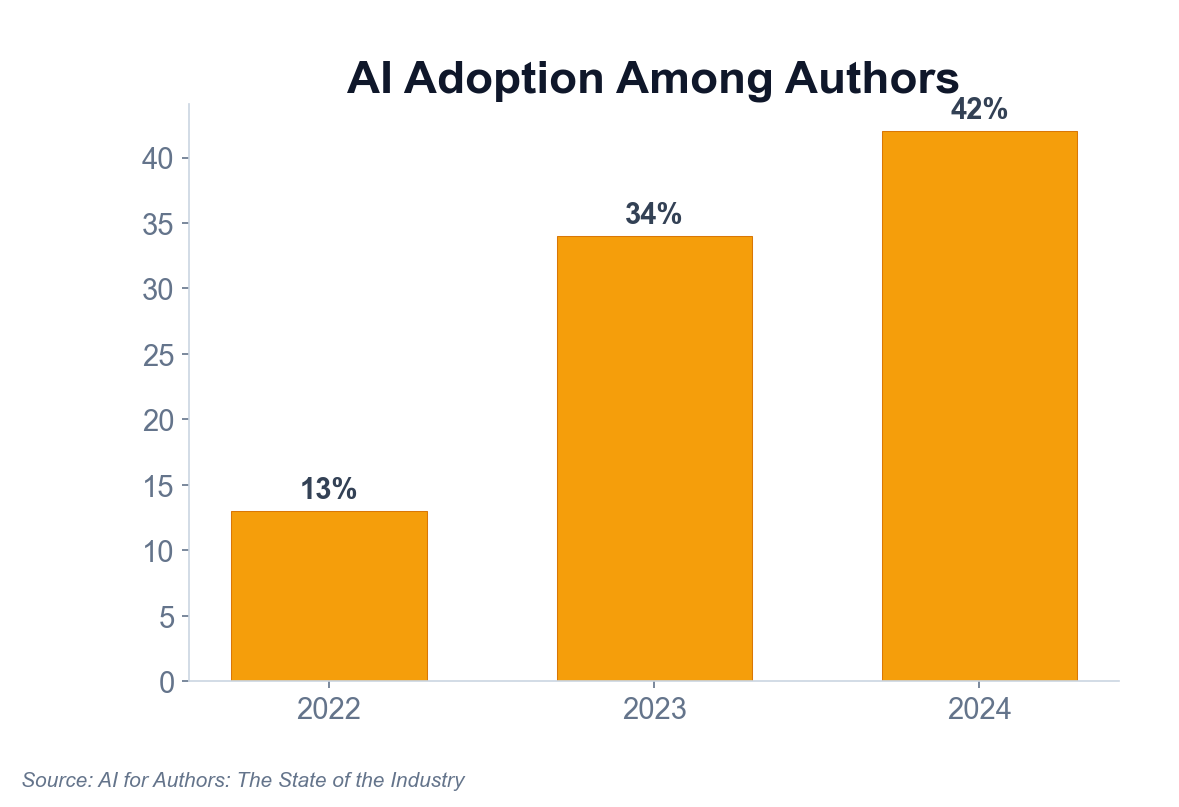
The integration of AI writing tools within the self-publishing community continues to expand. As AI technology advances, authors are increasingly exploring its potential to enhance their writing and publishing workflows. The data shows a steady climb in adoption rates among self-published authors.
In 2022, 13% of self-published authors reported using AI writing tools. This number jumped to 34% in 2023, and then reached 42% in 2024, according to "AI for Authors: The State of the Industry" (Written Word Media, 2024). The use of AI tools by indie authors has grown significantly in recent years. As AI technology continues to evolve, adoption rates are likely to climb as authors seek ways to streamline their writing and publishing processes.
Key takeaway: AI writing tool adoption among self-published authors has steadily increased, reaching 42% in 2024.
What Authors Use AI For
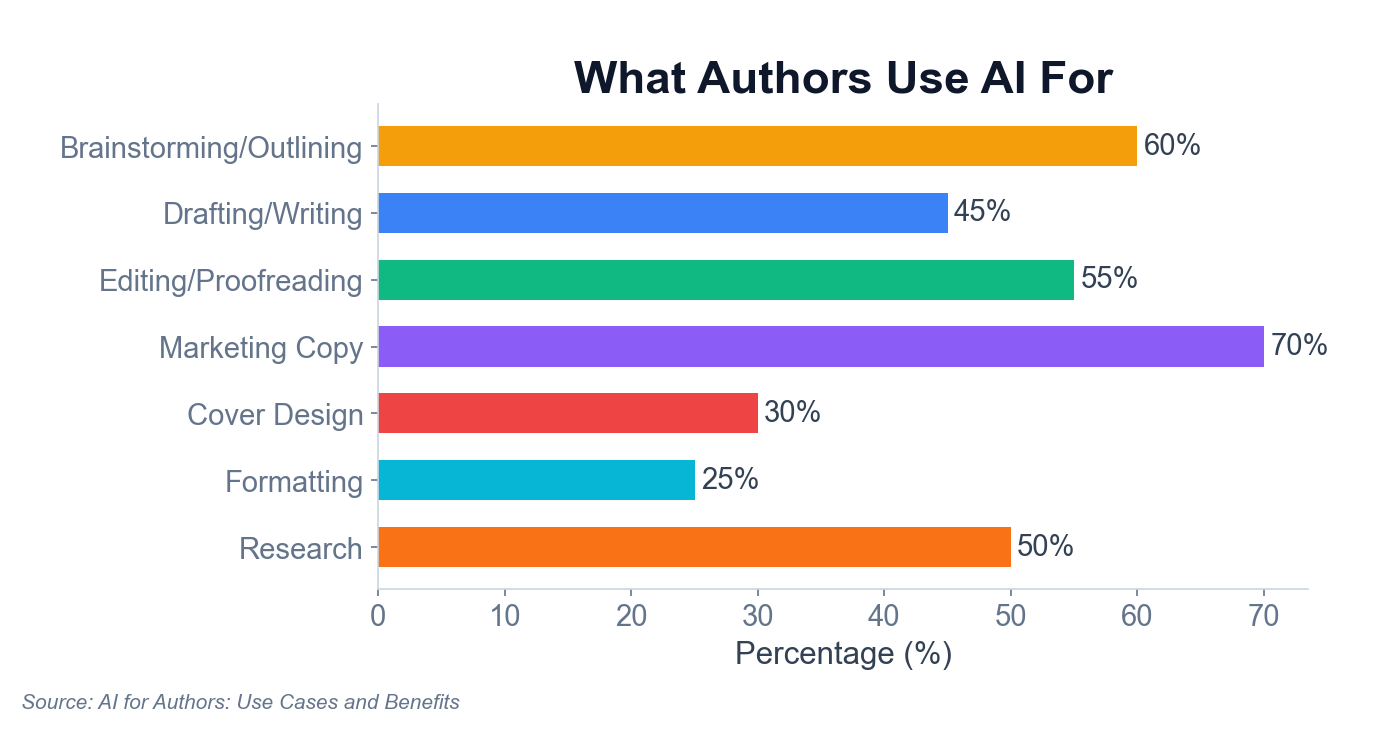
Self-published authors are finding diverse applications for AI tools, streamlining workflows and improving efficiency across various aspects of the publishing process. From generating compelling marketing materials to assisting with brainstorming and refining manuscripts, AI offers numerous benefits.
A 2025 study showed that 70% of self-published authors use AI for generating marketing copy. Brainstorming and outlining come in at 60%, with editing and proofreading at 55%. Research comes in at 50%, while drafting and writing is utilized by 45% of indie authors. Cover design and formatting appear to be areas where AI is currently used less frequently, with 30% and 25% of authors, respectively, using AI for those processes, suggesting potential growth opportunities.
Key takeaway: AI is most commonly used by self-published authors for generating marketing copy, followed closely by brainstorming/outlining and editing/proofreading.
Most Popular AI Writing Tools
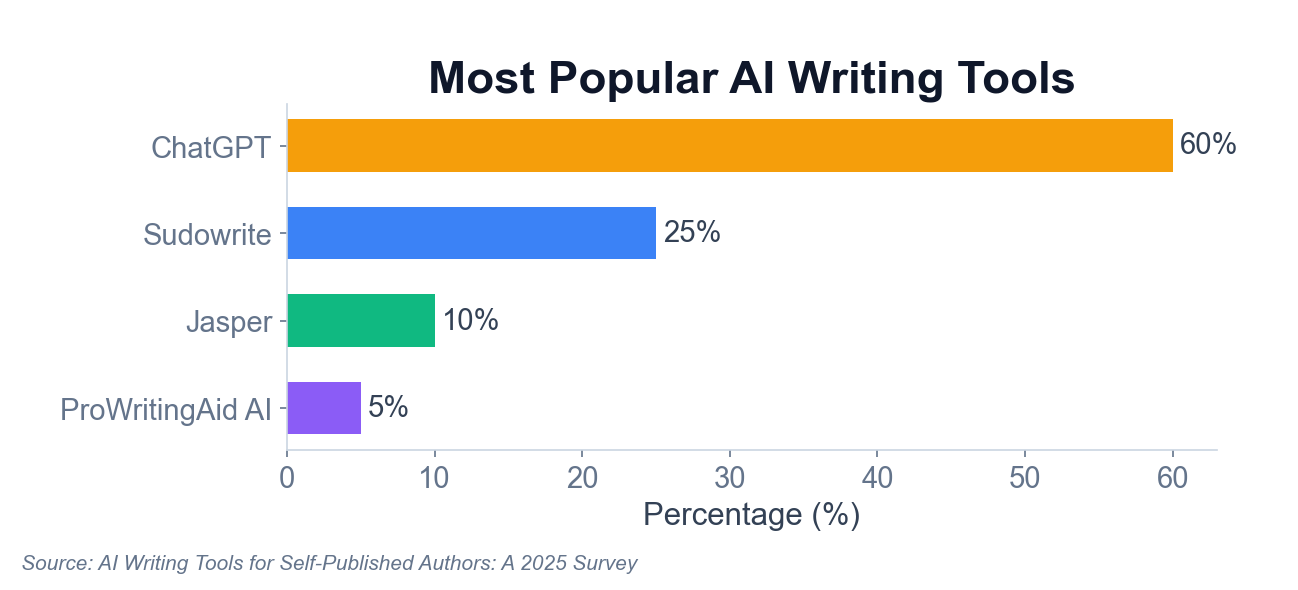
The AI writing tool landscape is becoming increasingly populated. While several options are available, some tools have emerged as frontrunners among self-published authors. Based on available data, it's clear that one tool dominates the market, although others are being utilized as well.
Based on estimated data from 2025 and 2026, ChatGPT is estimated to be used by 60% of authors, followed by Sudowrite at 25%. Jasper's adoption rate is around 10%, and ProWritingAid AI is used by about 5% of indie authors. This data indicates a diverse range of tools being explored within the indie author community.
Key takeaway: ChatGPT is estimated to be the most popular AI writing tool among indie authors in 2025-2026.
AI Writing Quality & Detection
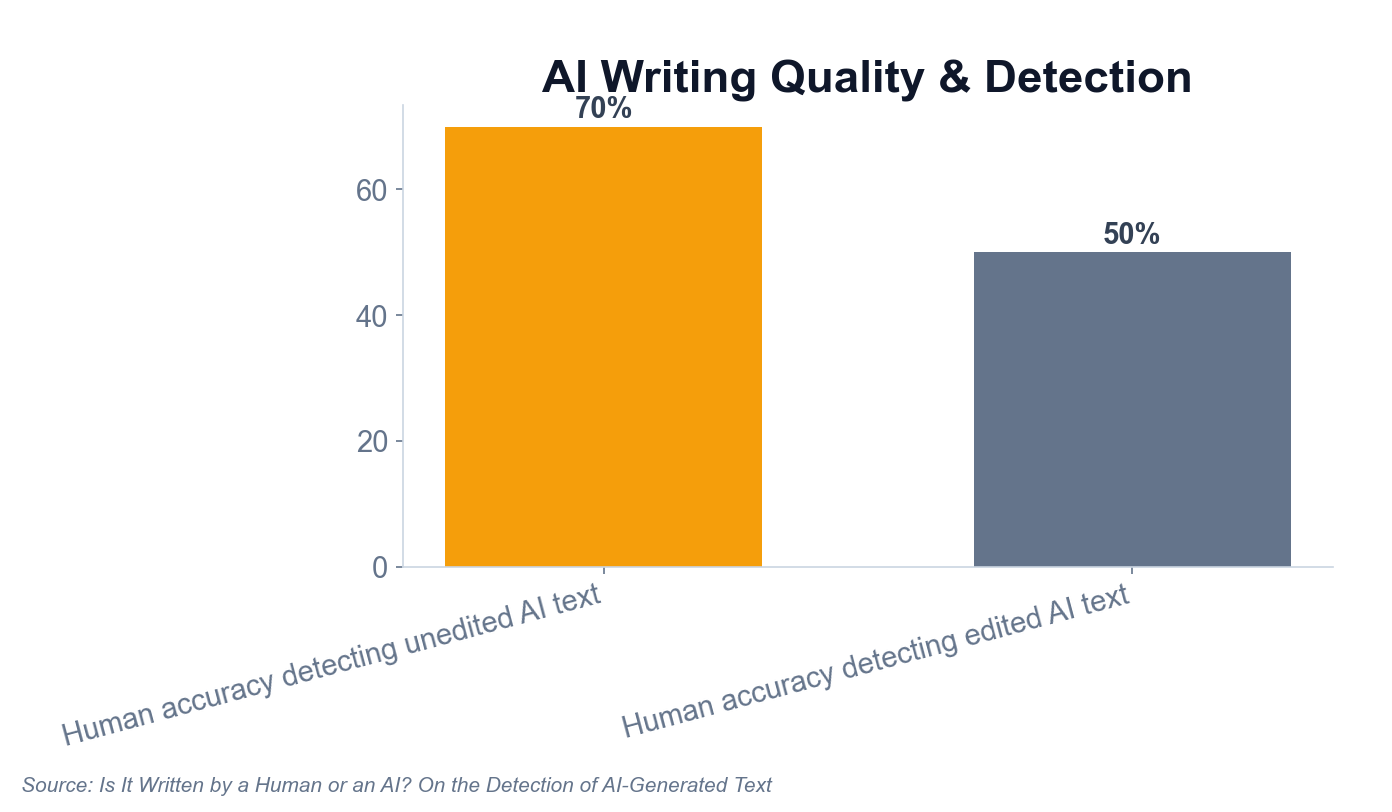
As AI writing tools become more prevalent, it's essential to consider the quality of the generated text and the ability to detect AI-generated content. While AI can produce impressive results, it's not without its limitations. Human review and editing remain crucial.
According to research, humans can identify unedited AI-generated text with approximately 70% accuracy. However, this accuracy drops significantly to around 50% when the text has been edited by a human. Therefore, indie authors may find AI a useful tool in their writing process; however current detection methods are becoming more sophisticated. Even edited text can still be identified, so transparency with readers should still be considered to maintain trust.
Key takeaway: Humans can identify unedited AI-generated text with some success, but accuracy drops significantly when the text is edited.
Amazon AI Publishing Policy Timeline
Navigating the policies of major publishing platforms like Amazon KDP is essential for self-published authors using AI. Understanding the guidelines ensures compliance and helps maintain a positive author-publisher relationship. While Amazon's policies are constantly evolving, some core principles remain consistent.
Indie authors publishing on Amazon KDP must be transparent about the use of AI in their books. While specific daily upload limits for AI-generated content aren't explicitly defined, Amazon emphasizes content quality and may take action against content that violates their guidelines. As of March 2026, Amazon KDP requires authors to disclose AI-generated content but does not specify daily upload limits or penalties beyond standard policy enforcement.
Key takeaway: Amazon KDP requires authors to disclose AI-generated content but does not specify daily upload limits or penalties beyond standard policy enforcement as of March 2026.
Cost: AI-Assisted vs Traditional Workflow
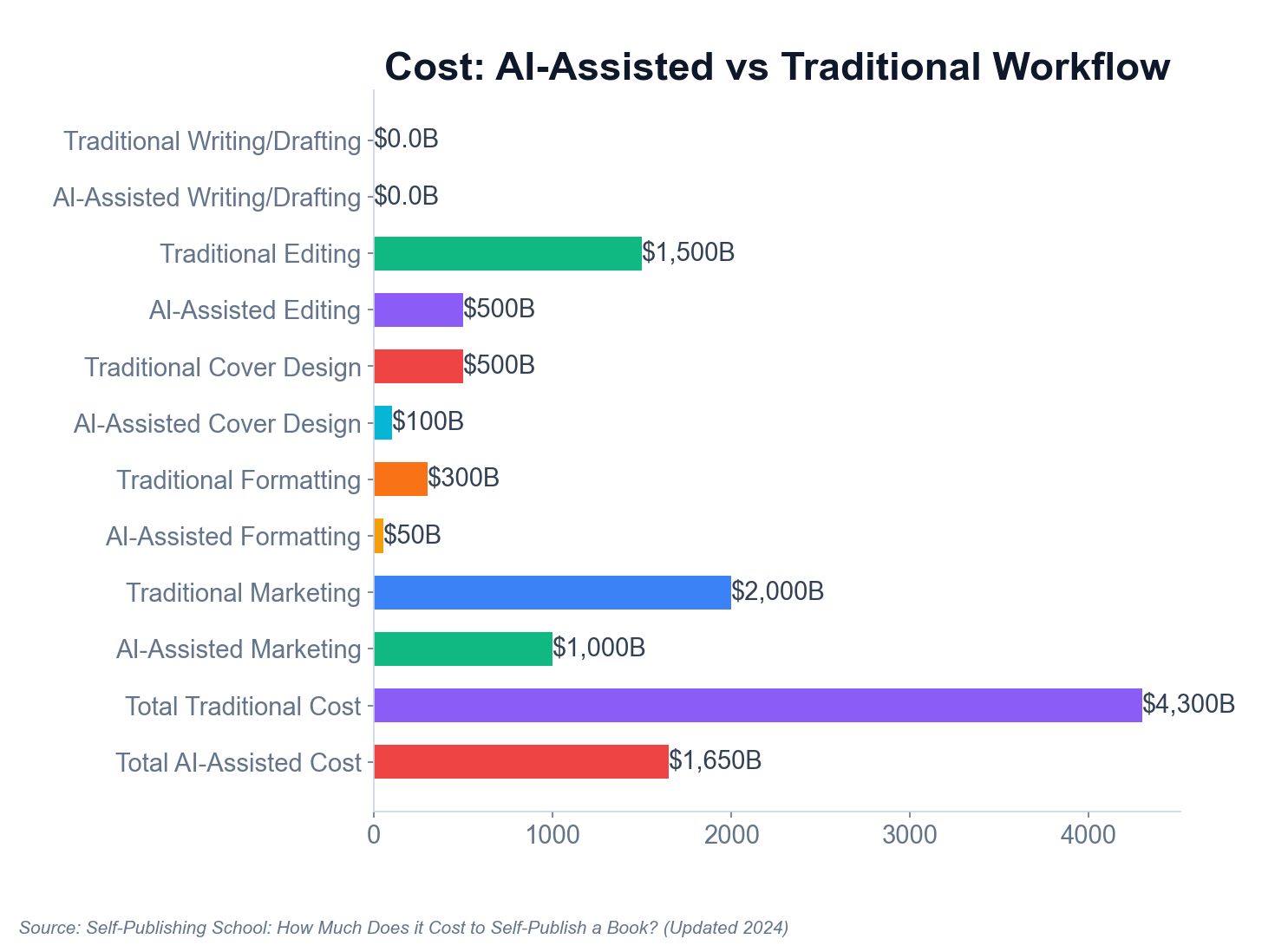
One of the most significant advantages of using AI in self-publishing is the potential for cost savings. From editing and cover design to formatting and marketing, AI tools can offer more affordable alternatives to traditional methods. The costs are expected to remain stable in 2025-2026.
AI can significantly reduce expenses across various stages of book production. According to data from 2024, traditional editing costs around $1500, while AI-assisted editing costs around $500. Traditional cover design averages $500, compared to $100 for AI-assisted design. Formatting expenses drop from $300 to $50, and marketing costs can be reduced from $2000 to $1000. Overall, total traditional costs average $4300, compared to $1650 for AI-assisted workflows. While traditional methods offer established quality control, AI alternatives present a cost-effective solution for budget-conscious authors.
Key takeaway: AI-assisted self-publishing workflows can significantly reduce costs, potentially saving authors thousands of dollars compared to traditional methods.
AI in Publishing Market Growth
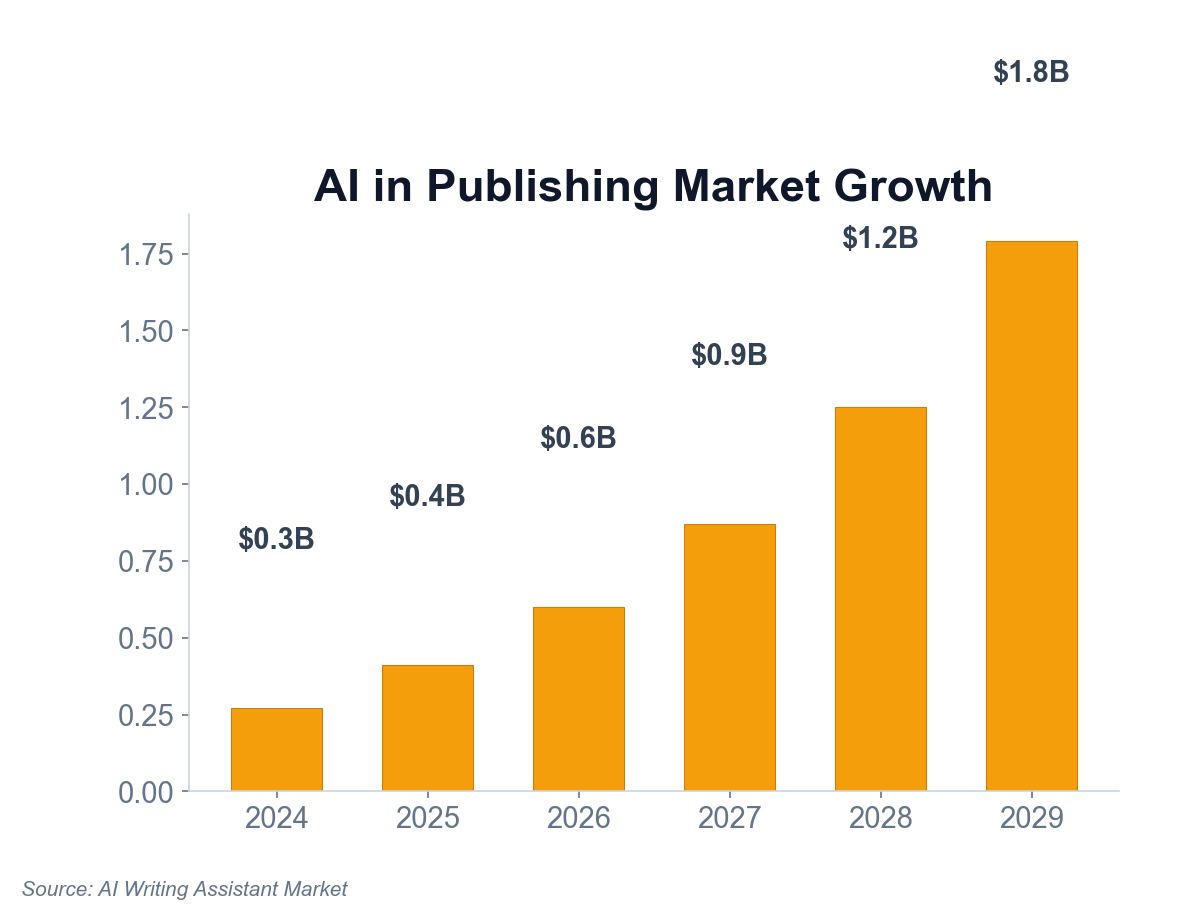
The AI writing assistant market is experiencing rapid expansion, signaling increased adoption and integration of AI in writing workflows. This growth presents both opportunities and challenges for self-published authors.
In 2024, the AI writing assistant market was valued at $0.27 billion. By 2025, it had grown to $0.41 billion, and in 2026, it's estimated to reach $0.6 billion. Projections indicate continued growth, with the market reaching $0.87 billion in 2027, $1.25 billion in 2028, and $1.79 billion by 2029. Indie authors can leverage these tools to enhance productivity and quality, but should also be mindful of maintaining originality and authenticity in their work.
Key takeaway: The AI writing assistant market is rapidly expanding, projected to reach $1.79 billion by 2029.
Author Sentiment Toward AI
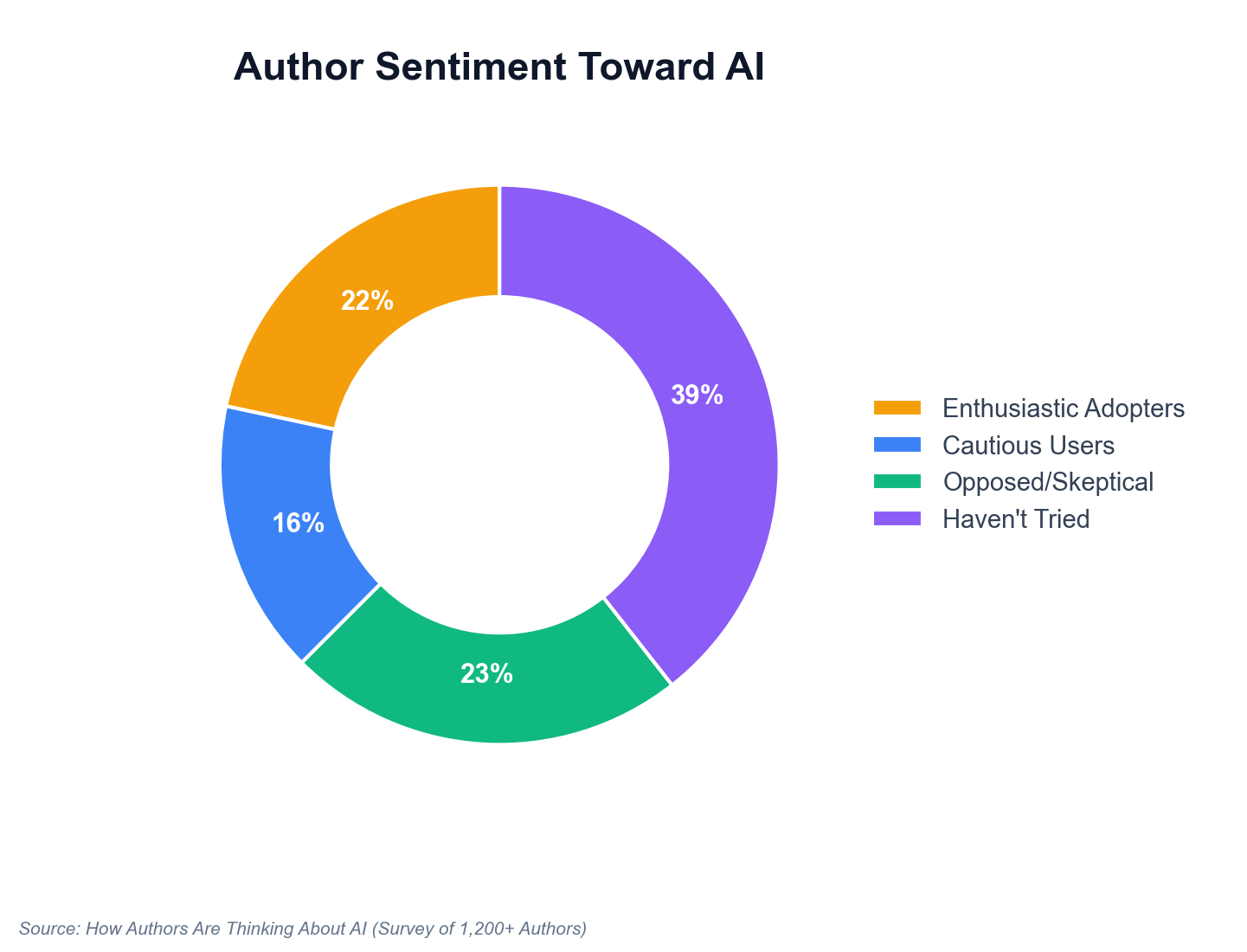
Author sentiment towards AI in writing is complex and varied. While some authors enthusiastically embrace AI, others approach it with caution or outright skepticism. This mixed sentiment reflects concerns about originality, ethics, and the potential impact on the writing profession.
Based on recent surveys, around 45% of authors are enthusiastic adopters, while 33% are cautious users. A significant percentage, 48%, are opposed or skeptical, and 82% in one survey reported not having tried AI at all. Among UK novelists, 33% use AI in their writing process, mostly for non-creative tasks. The primary reason for those not using AI is ethical concerns, particularly regarding copyrighted material being used without permission.
Key takeaway: Author sentiment towards AI in writing is mixed, with a significant percentage not using it due to ethical concerns and others cautiously exploring its potential.
What This Means for Authors
AI is transforming the self-publishing landscape, offering both opportunities and challenges. By staying informed about the latest trends, tools, and policies, you can harness the power of AI to enhance your writing and publishing process while maintaining your unique voice and artistic integrity. Transparency and ethical considerations remain paramount.
Sources
- AI for Authors: The State of the Industry
- AI for Authors: Use Cases and Benefits
- Indie Author Survey: AI Usage in Self-Publishing
- AI Writing Tools for Self-Published Authors: A 2025 Survey
- Indie Author AI Usage Report 2026
- Is It Written by a Human or an AI? On the Detection of AI-Generated Text
- AI Text Detection: Limitations and Future Directions
- Amazon Kindle Direct Publishing Content Guidelines
- Self-Publishing School: How Much Does it Cost to Self-Publish a Book? (Updated 2024)
- ALLi: How Authors Are Using AI - and What it Means for the Future
- Written Word Media: Book Marketing Services for Authors
- AI Writing Assistant Market
- How Authors Are Thinking About AI (Survey of 1,200+ Authors)
- Australian Authors' Sentiment on Generative AI - Macquarie University
- Half of UK novelists believe AI is likely to replace their work entirely